
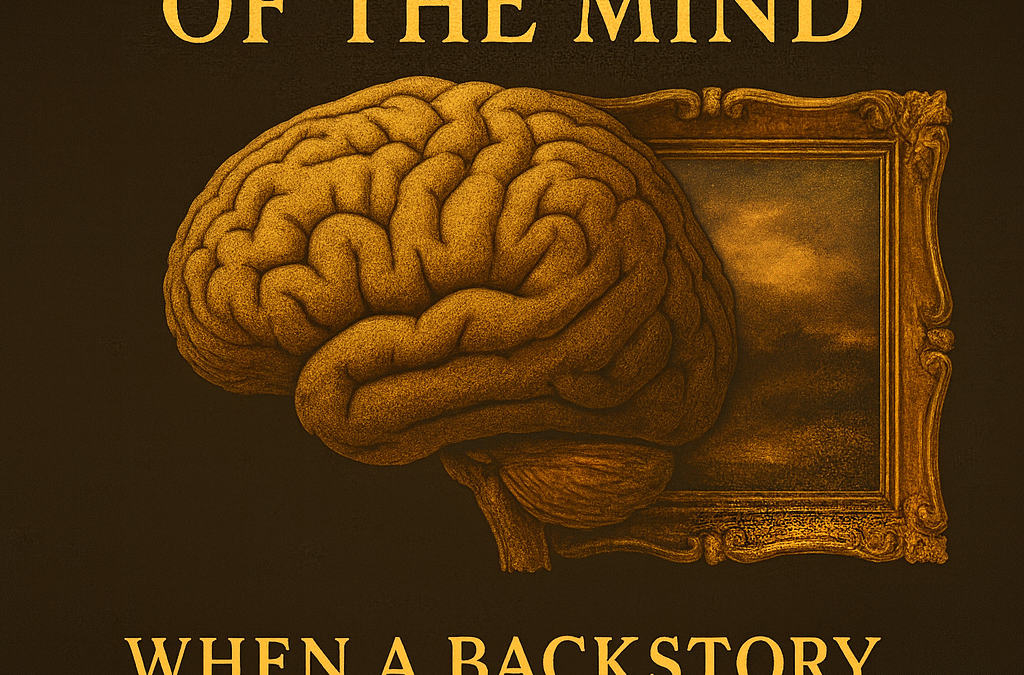
How the brain constructs the values that guide everyday decisions reveals one of neuroscience’s most fascinating puzzles. Think about it: your brain adds and subtracts quantities that share no common unit! It can add morning light through kitchen windows to forty minutes in traffic, subtract image and status from a car’s reliability and comfort. These things exist in completely different dimensions (light, time, dollars, social signals) yet somehow the brain is constantly adding and subtracting them when making decisions.
Let’s take buying a home as a concrete example. On paper it looks like a financial transaction, but in practice it’s a clash of incomparable currencies. Square footage gets weighed against school districts, the energy of a neighborhood against the stability of an investment. Walk through one house and you can already imagine your life there, until you realize it means your partner endures an extra hour of daily commute. Somewhere in this mix of clear measurements and ones that are hard to describe, the brain assembles a decision.
To make matters more complicated, think about how volatile our internal value estimates can be. During COVID, when daily commutes vanished, the value of space ballooned, potentially trumping distance; the same house that once felt impractical now seemed like a refuge. A new context can make ostensibly identical attributes exhibit radically different valuations.
The types of contextual changes that shift valuation are also themselves diverse. A genuine Monet may sell for $70 million. A forgery, indistinguishable to the eye and identical to anyone but the equipment of an art authenticator, might fetch $5,000. Same paint, same canvas, same aesthetic experience. Yet the (inferred) backstory behind it transforms its value by four orders of magnitude.
This is the computational puzzle at the heart of value-based decision-making: how does the brain make incomparable things comparable? What neural mechanism allows attributes measured in completely different dimensions (light, time, dollars, authenticity) to compete on the same playing field? And how does this mechanism remain stable enough to produce coherent choices yet flexible enough to radically reweight those same attributes when context shifts?

From the Wall Street Journal. Read the story here
The Construction of Value
Here’s the truth: we don’t really understand how this problem is solved. The question of how brains integrate diverse attributes into unified decisions remains one of the deep mysteries in neuroscience. Ultimately, the answer will likely come in cognitive and neural forms; two faces of the same computational coin. These perspectives will jointly explain the magic of turning morning light into a quantity that can be compared with commute time.
Despite the lack of a satisfying single narrative, we do know some fascinating pieces of the puzzle. Let’s start with what psychology has revealed about how value gets constructed.
One of the most striking findings is that arbitrary starting points can anchor our entire valuation system. Dan Ariely and colleagues demonstrated this by asking students to write down the last two digits of their Social Security number before bidding on items like wine, chocolate, and computer accessories. Students with Social Security numbers ending in 80-99 bid nearly three times more than those with numbers ending in 00-19. For a cordless keyboard, high-number students offered $56 while low-number students offered just $16. The same pattern held across all items. The initial number, though completely unrelated to the products’ worth, set an implicit scale that influenced all subsequent valuations. Once the brain latches onto a reference point, even a meaningless one, it builds an internally consistent preference structure around it.
Beyond arbitrary anchors, our sense of ownership profoundly alters how we value objects. In experiments by Kahneman, Knetsch, and Thaler, students were randomly given coffee mugs and then asked to name their selling price. These new “owners” demanded about $7 to part with their mugs, while students without mugs were only willing to pay about $3 to acquire one. The mug itself hadn’t changed. What changed was the relationship: once something becomes “mine,” its value doubles in my eyes. Norton, Mochon, and Ariely extended this finding by having people assemble IKEA furniture or fold origami cranes. Participants valued their own creations at nearly the same price as expert-made versions, even when their handiwork was visibly inferior. The act of creation adds a new attribute to the value calculation: the effort invested becomes part of what we’re evaluating, not just the object itself.
Even memory rewrites value. Daniel Kahneman and Donald Redelmeier studied patients undergoing colonoscopies. Some patients had longer procedures that ended less painfully, others had shorter ones that ended abruptly at peak pain. Counterintuitively, patients preferred the longer procedures. Their memories followed the “peak-end rule”: they judged the whole experience not by its average pain but by its worst moment and how it ended (Redelmeier & Kahneman, 1996). How we remember an experience, not the experience itself, determines how we’ll value similar choices in the future.
And value is deeply social. In a massive online experiment, Matthew Salganik and colleagues (2006) created artificial “music markets.” When download counts were hidden, songs rose or fell on their own. But when popularity information was visible, some songs snowballed into “hits” while others languished, even though the songs were the same across markets. Popularity itself became an attribute folded into value, warping what people genuinely preferred.

Daniel Kahneman: A most incredible thinker and contributor to the science of decision making (also a Nobel Laureate)
The Computational Challenge
If value is constructed rather than retrieved from a fixed look-up table, what exactly is the brain computing? Consider what components must somehow become commensurable:
Sensory attributes: The warmth of sunlight, the bitterness of coffee, the smoothness of silk. These arrive in different neural codes from different sensory systems, yet must be integrated into unified preferences.
Abstract properties: Distance (20 minutes), quantity (800 square feet), probability (70% chance). The brain lacks sensory receptors for these dimensions, yet they powerfully shape value.
Social signals: Status, belonging, reputation. That Monet carries social meaning that a forgery doesn’t. A Harvard degree signals something another school may not. These intangible attributes somehow get converted into the same currency as tangible ones.
Temporal projections: Future pleasure, anticipated regret, imagined satisfaction. The brain must evaluate things that haven’t happened yet, experiences it can only simulate.
Effort and ownership: The IKEA table you assembled, the garden you planted, the thesis you wrote. Investment of effort literally changes the computed value, as if the brain adds your labor to the object’s attributes.
Comparison context: The same option valued differently depending on what else is available. That $2,500 apartment seems expensive or cheap depending entirely on the alternatives, even irrelevant ones.
The remarkable thing is that the brain somehow integrates these components despite their fundamental incomparability. One prominent theory suggests the brain converts everything into a “common currency”; perhaps the firing rates (or patterns) of neurons in valuation regions. But how does social status get converted into the same neural code as commute time? What algorithm transforms the warmth of sunlight into the same units as financial security? Even if there is a common currency at the point of decision, the translation process remains mysterious. When you’re choosing between jobs or homes or life partners, all these incomparable attributes must somehow become comparable. One option just feels better.
How does the brain perform this translation and integration? That’s what the neural machinery must somehow accomplish.
The Neural Implementation
If value is constructed, where in the brain does this happen, and in what format? Researchers often divide into two camps. One view is that the brain collapses everything into a single “common currency,” a scalar signal that can be compared across apples, Monets, and commutes. The other is that value is represented in a richer, multidimensional code, more like a map of attributes than a single number, with scalar readouts emerging only when a choice is required. The best available evidence points to the orbitofrontal cortex (OFC) and the adjacent ventromedial prefrontal cortex (vmPFC) as being central to these computations.
OFC and vmPFC: a value map with scalar readouts
Work in macaques by Camillo Padoa-Schioppa and colleagues showed that OFC neurons encode subjective value in a way that is “menu invariant,” meaning the value signal for one option stays stable regardless of what it is paired against (Padoa-Schioppa & Assad, 2006). This stability supports transitive choice: if juice A is valued more than B, and B more than C, then A will be valued more than C. Human neuroimaging extends this by showing vmPFC activity tracks subjective value across many domains, including money, food, and social approval (Chib et al., 2009; Bartra et al., 2013).
However, newer analyses suggest the OFC does not simply produce one number. Instead, its population activity preserves multiple dimensions of value, such as taste versus health or probability versus magnitude (Schuck et al., 2016; Hunt & Hayden, 2017). In this view, the OFC is a “map-maker,” maintaining a structured representation of options that can be flexibly reweighted depending on context. Scalar value signals may still emerge, but only as a projection of this richer map.

Figure 1 of Moneta et al., 2024 Trends in Neuroscience.
The role of dorsal prefrontal regions: shaping and acting on value
Other prefrontal areas contribute in complementary ways. The dorsolateral prefrontal cortex (dlPFC), which is heavily involved in executive control, appears to adjust the weights assigned to different attributes. When people are instructed to prioritize health over taste, dlPFC activity reflects health information more strongly, and when told to focus on taste it reflects taste (Hare et al., 2009). Under certain conditions, the dlPFC may determine which dimensions of the map matter in a given context.
The dorsal anterior cingulate cortex (dACC), which monitors conflict and effort, often signals the difficulty or cost of a decision. Because it connects closely to premotor regions, it is well placed to bind abstract values to concrete actions. In challenging or effortful choices, dACC appears to integrate both the value of options and the anticipated cost of exerting control (Shenhav et al., 2013, Neuron).
A distributed system
The emerging picture is that value does not reside in a single place or a single format. The OFC and vmPFC maintain a flexible, map-like code of options. dlPFC helps determine which axes of that map to emphasize. dACC translates the chosen value into action, especially when the choice is close or costly. Striatal circuits and dopamine signals supply the learning machinery that updates the map when outcomes deviate from expectations.
Understanding this distributed system may ultimately reconcile the debate between scalar and map-like coding. The brain can preserve a rich geometry of attributes while also collapsing them into a scalar readout when a choice demands it. That dual capacity may be the key to how incomparable things become comparable.
Broader Implications
Understanding value as construction rather than retrieval has implications beyond individual choice. It might explain why the same economic conditions feel catastrophic or manageable depending on narrative framing. Why social media can shift entire populations’ valuation of political candidates through selective attribute highlighting. Why depression involves not just sadness but a fundamental inability to construct positive value from available attributes. Why cultural differences in what matters, individual achievement versus group harmony, lead to genuinely different experiences of the same situations.
The framework suggests that many societal conflicts aren’t really about different goals but about different attribute weightings. The same policy gets valued completely differently depending on whether you weigh “personal freedom” or “collective safety” more heavily. The same scientific finding gets valued differently depending on whether you weigh “economic growth” or “environmental protection.” Instead of viewing these as failures of rationality, an opposing view can be simply a different construction stemming from different weightings.
The Mystery of Value
We started with a puzzle: how does your brain weigh the comfort of a home’s interior against commute distance, nearby amenities against your spouse’s preferences? How do incomparable attributes become comparable values?
The evidence points toward construction rather than retrieval from a look-up table. Ariely’s anchoring studies show that random numbers shape our valuations. The endowment effect reveals that ownership doubles perceived worth. The peak-end rule demonstrates that certain details of memory encoding determine future value. Eye-tracking shows that attention creates preference. The Monet example shows that authentication can change value by four orders of magnitude.
These phenomena make sense if the brain builds value from available attributes, weights them according to context and goals, and compares through some form of competition. The neural data provides pieces: OFC/vmPFC may house a flexible map-like code that may be collapsed to a common currency scalar value for comparison. dlPFC circuitry may shape which axes of that map matter and dACC circuitry may read out the winning option in preparation for action.
But the core mystery remains. How does the brain actually perform the integration? What computation transforms sunshine through kitchen windows into a quantity that can be weighed against minutes of commute? How do narrative attributes like “painted by Monet himself” get converted into the same currency as visual beauty or investment potential?
The $70 million Monet shows how backstory can outweigh brushstrokes. What we don’t yet know is how the brain pulls off the trick of weighing sunlight against commute time, or authenticity against aesthetics. That algorithm remains one of neuroscience’s deepest mysteries.
If you enjoyed this piece, please consider subscribing to michaelhalassa.substack.com to follow along as I write about the brain, computation, and psychiatry. Some posts dive into the neuroscience of a particular mental phenomenon (like this one), while others deal with more clinically-relevant issues.
You can also share this post with a friend or colleague who might be curious about how our brains turn sunlight, stories, and symbols into value.
Bibliography:
Ariely, D., Loewenstein, G., & Prelec, D. (2003). “Coherent arbitrariness”: Stable demand curves without stable preferences. Quarterly Journal of Economics, 118(1), 73–106. https://doi.org/10.1162/00335530360535153
Bartra, O., McGuire, J. T., & Kable, J. W. (2013). The valuation system: A coordinate-based meta-analysis of BOLD fMRI experiments examining neural correlates of subjective value. NeuroImage, 76, 412–427. https://doi.org/10.1016/j.neuroimage.2013.02.063
Chib, V. S., Rangel, A., Shimojo, S., & O’Doherty, J. P. (2009). Evidence for a common representation of decision values for dissimilar goods in human ventromedial prefrontal cortex. Journal of Neuroscience, 29(39), 12315–12320. https://doi.org/10.1523/JNEUROSCI.2575-09.2009
Hare, T. A., Camerer, C. F., & Rangel, A. (2009). Self-control in decision-making involves modulation of the vmPFC valuation system. Science, 324(5927), 646–648. https://doi.org/10.1126/science.1168450
Hunt, L. T., & Hayden, B. Y. (2017). A distributed, hierarchical and recurrent framework for reward-based choice. Neuron, 96(2), 355–362. https://doi.org/10.1016/j.neuron.2017.09.031
Kahneman, D., Knetsch, J. L., & Thaler, R. H. (1991). Anomalies: The endowment effect, loss aversion, and status quo bias. Journal of Economic Perspectives, 5(1), 193–206. https://doi.org/10.1257/jep.5.1.193
Kaplan, R., & Friston, K. J. (2018). Planning and navigation as active inference. Biological Cybernetics, 112(4), 323–343. https://doi.org/10.1007/s00422-018-0753-2
Norton, M. I., Mochon, D., & Ariely, D. (2012). The IKEA effect: When labor leads to love. Journal of Consumer Psychology, 22(3), 453–460. https://doi.org/10.1016/j.jcps.2011.08.002
Padoa-Schioppa, C., & Assad, J. A. (2006). Neurons in the orbitofrontal cortex encode economic value. Nature Neuroscience, 9(3), 367–373. https://doi.org/10.1038/nn1726
Redelmeier, D. A., & Kahneman, D. (1996). Patients’ memories of painful medical treatments: Real-time and retrospective evaluations of two minimally invasive procedures. Pain, 66(1), 3–8. https://doi.org/10.1016/0304-3959(96)02994-6
Salganik, M. J., Dodds, P. S., & Watts, D. J. (2006). Experimental study of inequality and unpredictability in an artificial cultural market. Science, 311(5762), 854–856. https://doi.org/10.1126/science.1121066
Schuck, N. W., Cai, M. B., Wilson, R. C., & Niv, Y. (2016). Human orbitofrontal cortex represents a cognitive map of state space. Neuron, 91(6), 1402–1412. https://doi.org/10.1016/j.neuron.2016.08.019
Shenhav, A., Botvinick, M. M., & Cohen, J. D. (2013). The expected value of control: An integrative theory of anterior cingulate cortex function. Neuron, 79(2), 217–240. https://doi.org/10.1016/j.neuron.2013.07.007